
 Search
GOVERNANCE AND ETHICS
Upholding the highest ethical standards is a key to becoming the preferred global chemical leader.
- Materiality
- Progress
- Climate Change and Energy Efficiency
- Circular Economy and Sustainability Solutions
- Resource Efficiency – Water and Waste
- Biodiversity and Ecosystems
- Employment and Workforce Management
- Human and Labor Rights
- Supply Chain
- Corporate Social Responsibilty
- Occupational Health and Safety
- Product Stewardship
- Governance and Ethics
Our approach
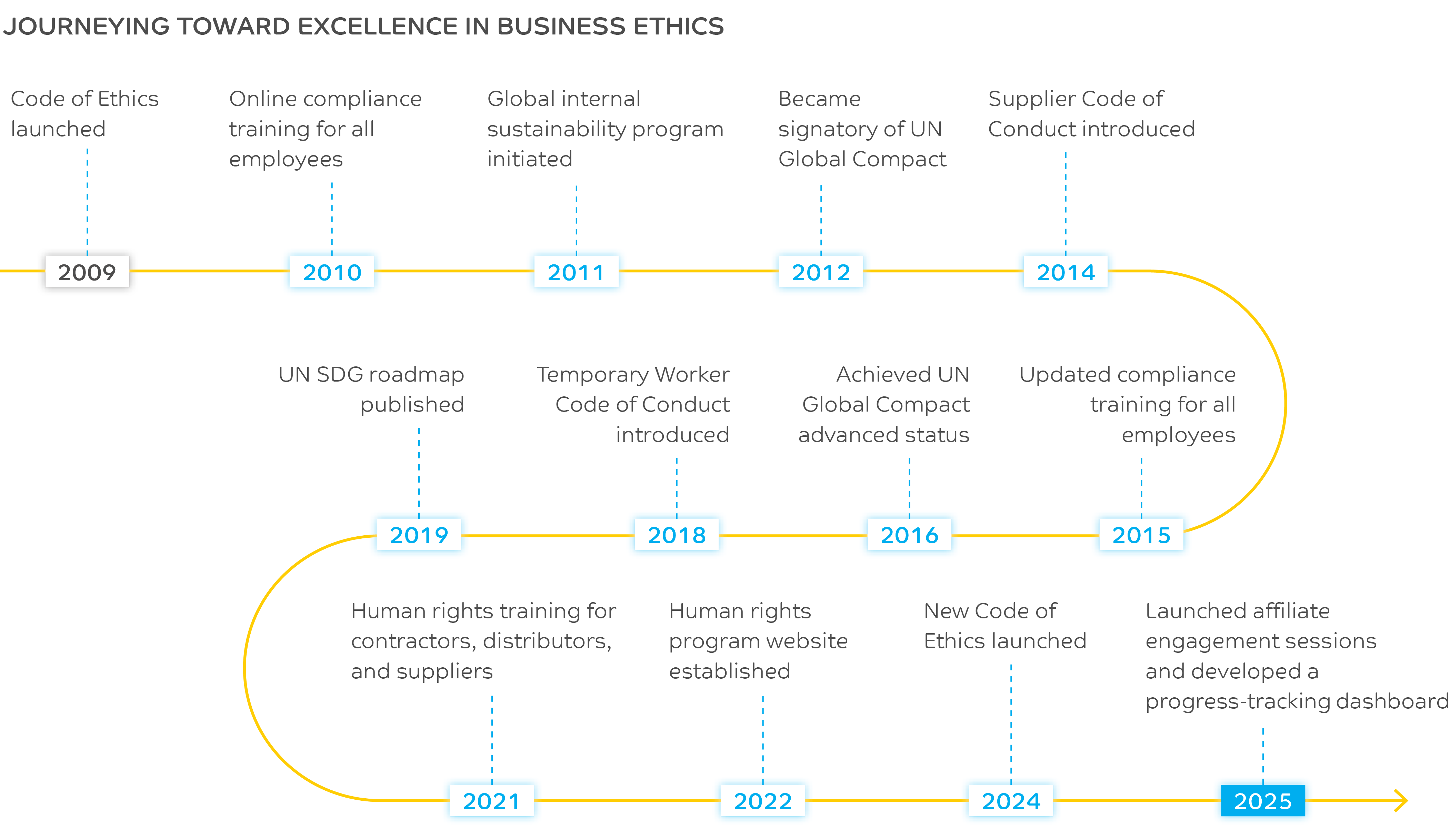
All employees are required to comply with the Code of Ethics, annually acknowledge their understanding, and complete mandatory training on relevant policies every two years. These requirements are reinforced through targeted in-person and virtual training sessions aimed at strengthening collective awareness of compliance obligations and fostering a culture of integrity. SABIC also encourages the reporting of integrity concerns through confidential channels, including an anonymous internal and external speak-up mechanism, supported by a non-retaliation policy that protects individuals who raise concerns in good faith or participate in investigations. Meanwhile, the CEO holds overall responsibility for the implementation of the Code of Ethics, while the Corporate Governance department is responsible for developing, implementing, and monitoring compliance in line with Board-approved requirements.
Furthermore, suppliers are required to adhere to SABIC's Supplier Code of Conduct, and temporary and contract workers follow a dedicated Temporary Worker Code of Conduct, both of which reflect the principles and expectations set out in SABIC's Code of Ethics. Additionally, SABIC also engages with its business partners, using online compliance training to build a shared understanding of key topics such as fair labor standards, anti-corruption, and anti-money laundering.
2025 developments
More than 50 new “Integrity Ambassadors” were selected across the Middle East and Africa region. New training and onboarding programs were rolled out across affiliates and corporate functions, with over 150 participants attending compliance sessions across 13 affiliates.
Governance and stakeholder engagement were strengthened through closer collaboration among key internal functions, including HR, EHSS, Cybersecurity, Procurement, Sales, and Marketing, to assess and manage compliance risks. Regular quarterly updates were provided to the Board Audit Committee on progress, risks, and mitigation measures, with no high risks identified for 2025.
SABIC also participated in the B20 South Africa Integrity & Compliance Task Force, an initiative to advance recommendations that help embed responsible business conduct and fight corruption across global markets and value chains.
Key metrics
-
271
Compliance concerns raised and investigated
-
95
Compliance violations identified
-
226
Compliance investigations closed
-
99%
Compliance e-training assigned and completed
-
1%
Compliance e-training overdue
-
9,000+
Live compliance training participants (incl. third parties)
Disclaimer: This abridged interactive version of the SABIC Integrated Annual Report 2025 is based on the original PDF report published on this website. In case of any discrepancy, the original PDF report will prevail.