
 Search
CLIMATE CHANGE AND ENERGY EFFICIENCY
SABIC aims to achieve operational carbon neutrality by 2050.
- Materiality
- Progress
- Climate Change and Energy Efficiency
- Circular Economy and Sustainability Solutions
- Resource Efficiency – Water and Waste
- Biodiversity and Ecosystems
- Employment and Workforce Management
- Human and Labor Rights
- Supply Chain
- Corporate Social Responsibilty
- Occupational Health and Safety
- Product Stewardship
- Governance and Ethics
Our approach
SABIC aspires to achieve carbon neutrality in its operations by 2050. To realize this ambition, the company has defined a carbon neutrality roadmap, which lays out its plans to decarbonize owned operations, through interim goals along the way.
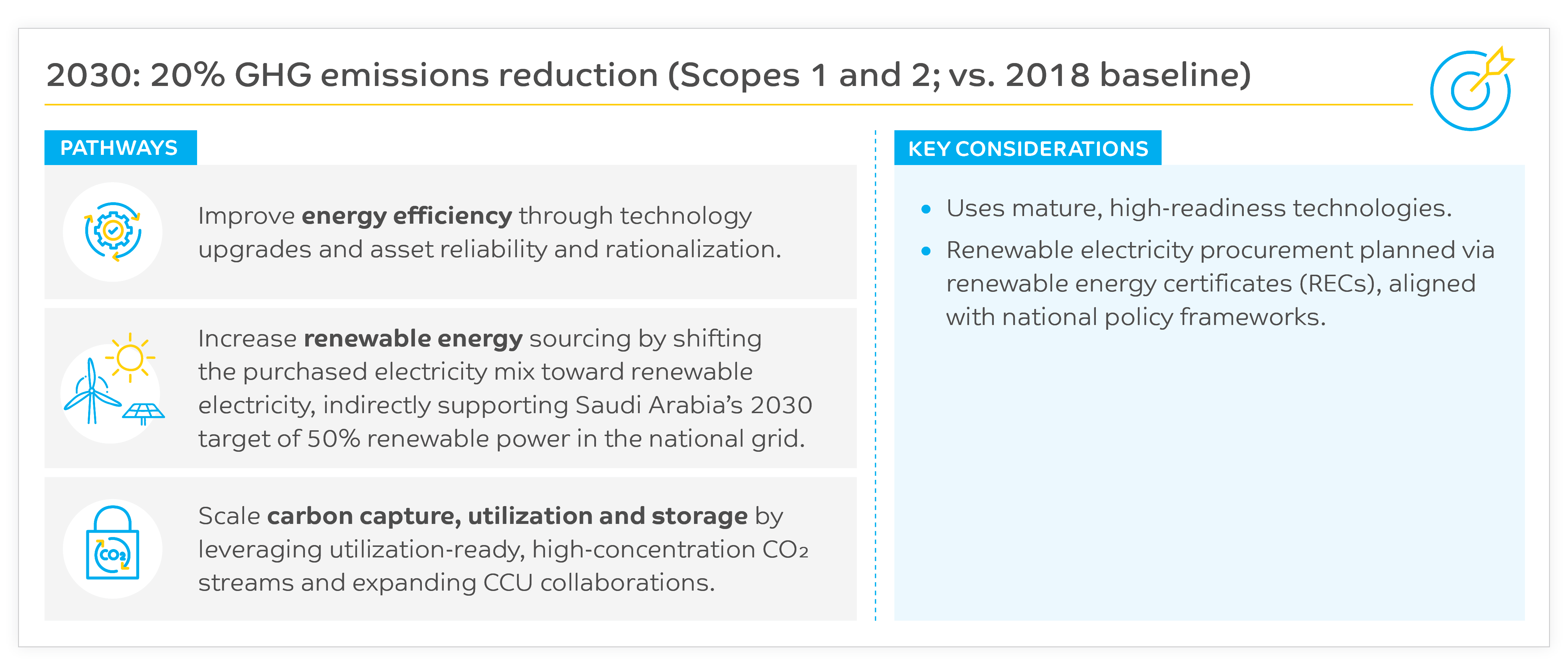
The carbon neutrality roadmap defines five key decarbonization pathways: reliability and energy efficiency, renewable energy, carbon capture and utilization (CCU), electrification, and low-carbon hydrogen. To meet our interim target of reducing absolute Scopes 1 and 2 GHG emissions by 20%, by 2030 from a 2018 baseline, we have tangible actions in the areas of energy efficiency, operational excellence, process optimization, and the development of low-carbon solutions. Beyond 2030, we will explore strategic options to continue reducing emissions while maintaining operational efficiency.
Carbon Neutrality Roadmap
2025 developments
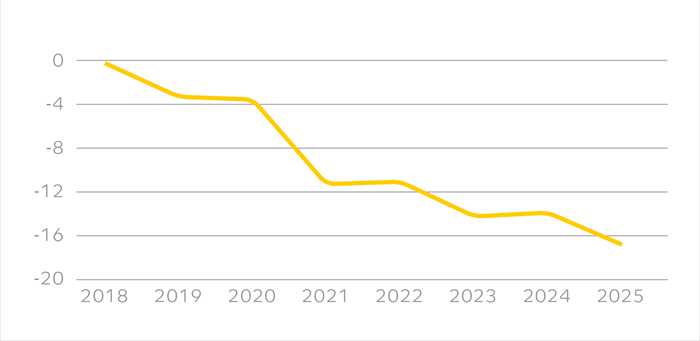
SABIC reduced its absolute GHG emissions by 16.9% compared to the baseline of 2018. This was achieved via the deployment of different measures including renewable energy and energy efficiency improvement programs.
GHG EMISSIONS (SCOPES 1 AND 2, MILLION tCO₂e)
% CHANGE IN GHG EMISSIONS (SCOPES 1 AND 2) VS. 2018 BASELINE
Energy efficiency
SABIC advanced energy-efficiency initiatives aligned with the Saudi Energy Efficiency Program (SEEP) by completing a mega project in an MTBE production unit and implementing a low temperature recovery system (LTRS), which contributed to improved plant efficiency and reduced emissions.
Renewable energy
In Europe, the company transitioned 65% of electricity consumption to renewable sources, achieving a cumulative 79% reduction in electricity-related indirect emissions versus 2018. In China, the Shanghai Technology Center reached 100% renewable electricity, while solar installations at Shanghai, Nansha and Chongqing increased on-site renewable generation, with Nansha reaching full coverage. In Saudi Arabia, we aim to increase our renewable electricity share driven primarily through plans for Renewable Energy Certificates (RECs) in alignment with national policy frameworks for the procurement of renewable energy for our plants.
Carbon capture and utilization (CCU)
SABIC operates a CO₂ capturing unit in Jubail, Saudi Arabia, with a capacity of up to 500 kilotons per annum, which is removing CO₂ from our glycols production plants. This CO₂ is converted into downstream products methanol and 2-ethylhexanol. The product carbon footprint and mass balance accounting of the products produced at our glycols unit, including the CO₂ plant as well as the downstream methanol and 2-ethylhexanol plants, were certified under the ISCC Carbon Footprint Certification (CFC) scheme and verified by an independent third party.
Electrification
The SABIC-BASF-Linde steam cracker electrification project progressed with extended operational testing of the world's first large-scale demonstration plant for an electrically heated steam-cracking furnace. Development of this technology improved heat-transfer efficiency with the potential to reduce the direct emissions from one of the most energy-intensive chemical processes by about 90%.
Low-carbon hydrogen
SABIC continues to explore low-carbon hydrogen as a key enabler in its carbon neutrality journey. This effort comes in the form of partnerships and collaborations with low-carbon hydrogen producers, as we move toward utilizing it in fuel and feedstock applications.
Key metrics
-
16.9%
Absolute GHG emissions reduction (Scopes 1 and 2) vs. 2018 baseline (2030 target: 20%)
-
57%
Flaring emissions reduction1 vs. 2010 baseline
(2025 target: 65%) -
3.9 Mn. t
Total CO₂ utilization₂, including CO₂ captured and converted into urea
-
23,742.69 t
NOx emissions (2025)
-
3,298.38 t
SOx emissions (2025)
Disclaimer: This abridged interactive version of the SABIC Integrated Annual Report 2025 is based on the original PDF report published on this website. In case of any discrepancy, the original PDF report will prevail.